Investing vs. Speculating: Beauty and the Beast of Markets

Investing vs. Speculating: Beauty and the Beast of Markets

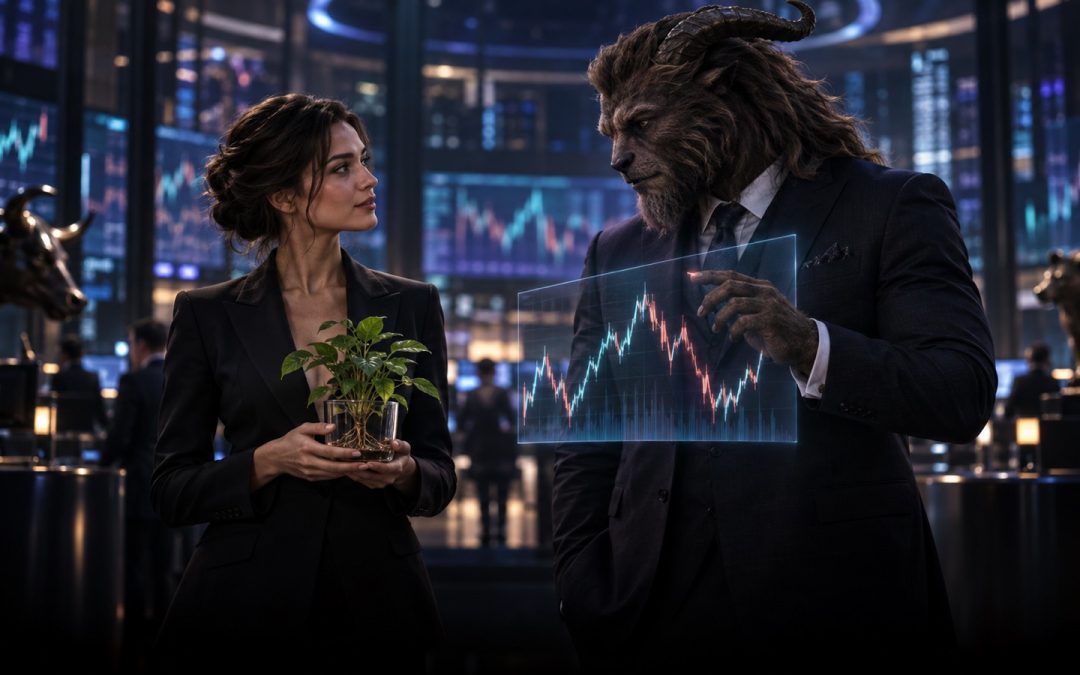
A suited woman holds a plant while a suited beast-like figure studies a trading chart opposite her.
Investing & tradingPerspective

Investing vs. speculating:
beauty & beast?

Investing sounds prudent; speculation sounds dangerous. Yet a long time horizon does not make a decision sound by itself, and a short one does not make it foolish. Your goal, your reasoning and the risk you actually take matter more.

The plant and chart stand for two approaches, neither of which guarantees an outcome.Image: TradeNeon

Two ways into a market.
Both require judgement.
What the terms mean, where they overlap and how to assess their risks.
Show contents

Whether you are new to markets or have years of experience, you will have heard the words “investing” and “speculating”. It often seems obvious which sounds better. I felt the same, although I do both. So let me start with a question: Which sounds more positive to you, “I invest in the market” or “I speculate in the market”?

Investing may bring patience and foresight to mind; speculating may suggest bets and quick gains. That difference in how the words sound is where this article begins. It says little about how someone actually makes decisions or what risk they take. Let us look at the terms, their place in market history and, finally, the question of when a trading idea amounts to more than hope.

The key distinction

Investing and speculating are not moral opposites. An investment usually centres on a longer-term goal and the development of an asset; speculation centres more strongly on an expected price move. Either can be thoughtful or careless. Both can lose money.

01

Two terms, no fixed boxes

Why does one word sound so much more reassuring? In everyday language, to invest is to devote money, time or effort to something. It suggests building for the future. By contrast, the German verb for “speculate” can mean either to expect something or to conjecture, as the Duden dictionary shows. One meaning sounds calculated, the other uncertain. Language helps explain the reputation.

Public images differ too. Investors are often portrayed as patient thinkers who support businesses, while speculators appear as gamblers who drive prices. Both images simplify reality. Holding an asset for years does not show whether the purchase was well reasoned; a short-term position need not be impulsive.

If you hold a stock for years, you may be investing in the future of its business. If you buy the same stock because you expect a short-term move, your decision is closer to speculation. The instrument does not settle the question; your time horizon, reasoning and risk plan say more.

The boundary remains blurred. Long-term investors also form expectations about the future, while traders may base their decisions on data and defined rules. These labels help explain an approach; they do not assess any individual trade for you.

02

Beauty: investing for a longer goal

Woman in a dark suit tends a plant while reading a notebook.
The plant represents a long planning horizon, not assured growth. Image: TradeNeon

For a longer-term investment, ask what the money is meant to accomplish, how long it can remain invested and which fluctuations you can tolerate without abandoning your plan at a difficult moment.

DiversificationSpreading capital across different investments to reduce the impact of a single holding. Losses remain possible. can limit exposure to one company or market. It cannot remove general market risk or prevent all losses. The SEC's investor guide to time horizon and diversification treats both as starting points for an investment decision.

“Long term” is no safety guarantee. A concentrated stock position, an unsuitable time horizon or borrowed money can make a supposed investment highly risky.

03

The beast: speculating on price

The Latin speculari means to watch or observe. The word's origin is a reminder that speculation can involve observation and a view of what may happen next. Etymology does not show that every present-day trade is carefully analysed. A market view can be built on evidence or simply guessed.
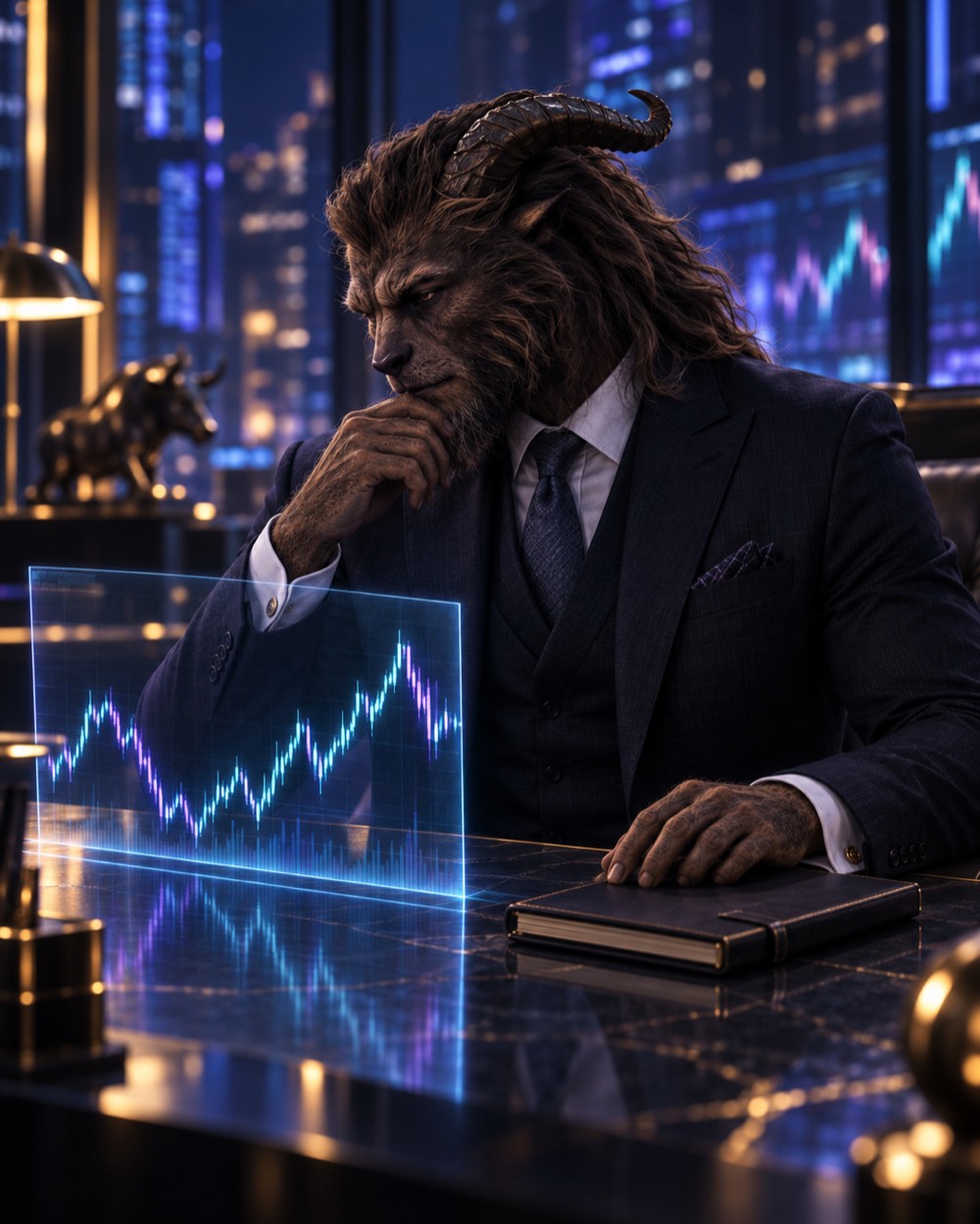
Beast-like figure in a dark suit studies a trading chart beside a closed notebook.
A market view also needs a plan for the possibility that it is wrong. Image: TradeNeon

SpeculationSpeculation is buying or selling an asset because you expect its price to change. makes an expected price change central to the decision. The horizon may be short or longer. A trade needs a clear thesis, rules for entry and exit, and a controlled position size.

Take particular care with leverageBorrowing or derivatives allow a larger market exposure than the capital committed. Gains and losses can both be amplified.. The SEC's investor bulletin explains why leveraged positions can carry substantial additional risk.

Reasoned speculation is no promise of profit. Without rules, a trade can turn into wishful thinking; with rules, mistakes and losses remain possible.

04

What speculation can do for markets

Why, then, does speculation have a poor reputation? Exuberant expectations and buying with borrowed money played a part before the 1929 stock market crash. The boom of the 1920s attracted more investors, some of whom paid for only a small share of their stocks with their own funds. When prices fell, debt increased the pressure. Yet the crash and the Great Depression had several causes. Neither speculators nor a single emotion can explain them on their own.

In futures markets, speculators may take the other side of positions that commercial participants want for hedging. They can thus contribute to market liquidityMarket liquidity describes how easily an instrument can be traded without one order moving its price sharply. and price discovery. That does not mean every speculative trade makes prices stable. The US futures regulator discusses both their contribution and the limits of that claim.

A village market makes the possible effect easier to picture. Three sellers offer identical cartons of eggs for three, five and seven euros. Once the cheapest cartons sell out, buyers face a sharp jump to the next price. If more sellers offer cartons at prices in between, buyers see more choice and smaller gaps between offers. In financial markets, additional buy and sell orders can likewise make trading easier. But the example does not prove lasting price stability. In a panic, many participants may rush to the same side at once.

For commodities such as oil or wheat, the need for counterparties is especially clear. Producers and users hedge against price changes; speculators can take the other side of those trades. Whether a particular market is calmer as a result depends on supply, demand, market structure and participant behaviour.

The 1929 crash shows the danger of excess and borrowed money. From its September 1929 high to July 1932, the Dow Jones fell about 89% – not within a few weeks. Causes and consequences reached far beyond the decisions of individual speculators. Federal Reserve History documents the timeline.

The economic consequences were severe: banks came under pressure, credit tightened and unemployment rose. Responses to financial crises later included deposit insurance and stronger requirements for banks. These measures emerged at different times and for different reasons; they are not a single set of immediate responses to the October crash.

Market-wide circuit breakers were not an immediate response to 1929, either. The coordinated US trading-halt rules followed the crash of 1987, according to the SEC.

05

Do rules make speculation predictable?

Can speculative trading amount to more than gambling? A trade without a reasoned thesis, limited risk or a plan for being wrong resembles a wager. A planned trade can instead be examined. That does not mean it will win, or that rules alone create an edge.

A system can make decisions comparable and open to review. The efficient-market hypothesisThe efficient-market hypothesis examines how available information is incorporated into market prices. is a reminder of how difficult a lasting edge may be. It is not a claim that every active approach must fail. Fama's research review distinguishes different information sets and tests.

Even a comparison with an index demands care. Beating a broad stock index over a short period may be luck. Longer records must also account for risks, costs and a suitable benchmark. The efficient-market hypothesis provides a framework for such tests. It is neither a mathematical proof that every trader must fail nor a licence to assume that one's own method is an exception.

A backtestApplying predefined trading rules to historical data. A good historical result does not prove future profits. can show how rules would have behaved in past data. Hindsight, overfitting and omitted trading costs can distort it. Testing in a demo account adds observations, but does not reproduce real execution under financial risk. The CFTC specifically warns about hypothetical results.

Backtesting and forward testing are two different stages: first examine predefined rules against historical data, then observe them on new data or in a demo account. The key is not to rewrite the rules after each poor result and then present the revised backtest as an independent test. Even a favourable result provides clues, not a reliable forecast for your own account.

In their 2007 review, Park and Irwin found 56 positive, 20 negative and 19 mixed results among 95 more recent studies of technical trading strategies. That is one reason why a blanket “it never works” is too simple. The authors also discuss problems including data selection and differences in methods. The studies examine different markets and strategies. They do not show that a particular course, trader or reader will outperform a benchmark in future.

The newer data-driven strategies mentioned in the original are not recipes that transfer directly to an individual account. Some research assumes data, infrastructure or execution that retail traders do not have. Isolated examples and monthly returns without an appropriate comparison can distort expectations. To judge a method, ask for a complete record, costs, losing periods and practical feasibility.

A test, not a promise

Ask which data were available before a trade, how costs and losing periods were counted, and when the method would be rejected. One compelling example is no substitute for a reliable record.

06

Which approach serves your goal?

Is speculation the beast of the market, then? The answer depends on the behaviour you mean. Overconfidence, heavy borrowing and decisions made in panic can cause harm. Observation, a plan that can be tested and limited risk can provide a basis for a trade. Even then, the outcome remains uncertain. A systematic method does not become profitable merely because it has rules.

Investing and speculating are therefore not moral roles you must choose between once and for all. Both involve an uncertain future. They often differ in what you expect to happen, how long you commit capital and what work a decision requires. Someone seeking to build wealth over many years asks different questions from someone trading a particular price move.

Investing

Question: What should this capital accomplish over a longer period?

Work: Define your goal and horizon, diversify and review the plan.

Risk: Price swings, losses and unsuitable choices of asset or timing.

Speculating

Question: Which price move do I expect, and what would invalidate the idea?

Work: Analyse the market, set trading rules, document decisions and manage risk.

Risk: Losing trades, costs, execution problems and amplified losses with leverage.

You do not have to choose a character. Long-term investing and active trading can serve different purposes. Treat each with its own goal, suitable capital and a plan you can test.

Perhaps “I speculate” now sounds less like a synonym for gambling, while “I invest” sounds less like a guarantee of safety. The label cannot protect you from a mistake. Ask instead: Why am I taking this position? What would invalidate my reasoning? What loss could I bear? That turns the picture of beauty and beast into a concrete market decision.

TradeNeon Academy
Explore the learning paths
From stocks and ETFs to structured trading education: compare the content and requirements at your own pace. Programmes are currently offered in German.
View courses and programmes
Frequently asked questions
Is investing always safer than speculating?

No. Holding an asset for longer does not remove market risk or the risk of an unsuitable investment. The type and duration of the risk often differ.

Is speculation the same as gambling?

Not necessarily. A reasoned market view with defined rules differs from a random bet, although it cannot secure a profit.

Does a backtest prove a strategy works?

No. It only models a result on past data. Rule selection, costs and future market conditions may change the real outcome.

Can I invest and trade?

Yes, provided you plan their purposes, capital and risks separately and can bear the financial consequences.

Simon Reichert
Simon Reichert
Swing trading coach · TradeNeon
Simon Reichert is a swing trading coach at TradeNeon. He studied International Business Management, worked in finance and auditing, and has traded actively since 2022. His focus is swing trading, the broader market context and risk management.
Human Capital: Invest Today in the Skills You’ll Need Tomorrow

Human Capital: Invest Today in the Skills You’ll Need Tomorrow

Oliver Sparing stands with folded arms in a dark library, surrounded by books and two black winged wallets.
InvestingFoundations

Human Capital Invest Today in the Skills You’ll Need Tomorrow

When I started trading, I wanted to know when I would make money from it. Today I ask a different question: What skills am I building, even when the next trade tells me nothing about my progress?

Oliver Sparing and the flying wallets: an AI-created editorial image of his first encounter with the market.Image: TradeNeon

One of my guitar students was called Alex. One day he showed me how EUR 500 had become EUR 4,000 in the market within a few days. His explanation stayed with me: the stock market was like a wallet. You opened it, took out the money and closed it again. I was fascinated. And I wanted to know how he had done it.

A single black leather wallet with feathered wings flies in front of dark library shelves.
The flying wallet echoes Alex’s comparison. A quick gain was a beginning, not a business model. Image: TradeNeon

So I opened a trading account. In one of my first trades, I bet on the DAX, risked too much and added to the position when the market moved against me. Very little of my first deposit was left. Alex could not hold on to his quick gain either. The question we should have asked was: Do we even understand the risk we are taking? Instead, I asked how I could recover my loss as fast as possible.

The question of quick profits

People starting to trade often ask, “When will I become profitable?” I understand why. Learning takes time and often money. But one winning trade does not answer that question, and neither does an expensive course. The US investor education site Investor.gov warns that day tradingIn day trading, positions are opened and closed within the same trading day. can lead to substantial losses in a short time. Money needed for living costs or an important reserve does not belong in an experiment with open-ended risk.

What investing in yourself really means

After that start, I looked for people I could learn from. At a free brokerA broker carries out market transactions on a client’s behalf. Private investors need a brokerage account to trade. seminar, the first thing I saw was advertising built around quick success and a Porsche. Later I met someone who took time to study company figures and charts. His expectations for possible annual results disappointed me then. I had seen much higher numbers online. I followed the bigger promises and mainly lost time. Looking back, I judged a method by its advertised return before I understood how it worked or whether it suited me.

That is the heart of human capital for me: knowledge, skills and judgement that I develop through learning and practice. The OECD defines human capital as the stock of knowledge, skills and other personal characteristics that help people be productive. A book, a seminar or a training programme can be a starting point. What I learn becomes a skill only when I test it, practise it, recognise mistakes and change my decisions accordingly.

Later I learned to analyse data on commodities, seasonality and futures markets. That suited my interest in precious metals. On a trading floor in London, I saw traders watching many markets at once across several screens. I learned something there about routines and decisions under pressure. I also realised that I did not want to copy that way of trading. That was progress too: I could better distinguish which approach fitted my time, interests and understanding of risk.

My path began in 2011. My swing and options trading became profitable for the first time in 2014; I learned on a trading floor in London in 2017, and reached profitability in day trading in 2018. Today, in 2026, I teach as TradeNeon’s Head Coach. This is my story, not a timetable for anyone else. Profitability is possible, but it takes skill, practice and an understanding of risk. You cannot buy it by enrolling in a course. Read more about my path at TradeNeon.

Today I do not judge progress by one day’s profit alone. Before a trade, I want to be able to say why I am entering, what would invalidate my idea and how much I could lose. Afterwards, I want to distinguish between three things: Was the idea wrong? Did the market behave differently from what I expected? Or did I abandon my own plan? These questions turn an outcome into an experience I can learn from. A gain in the account may be luck. A well-reasoned decision can be examined, even when the individual trade loses.

A trading education programme can provide direction and give you a place to discuss mistakes. It cannot guarantee a shortcut to profitability or a financial payback. Today I would look closely: What exactly is taught? Are losses, costs and limits explained openly? Can the person not only trade but also teach clearly? Germany’s consumer advice centre warns (in German) about trading coaching advertised with rapid, high gains. A good trader is not automatically a good teacher. And a good teacher cannot do the practice or make the decisions for you.

What remains of the first EUR 5,000

Years later, at a garden party, my girlfriend’s cousin asked me what he should do with the EUR 5,000 he had saved after finishing his apprenticeship. The question sounded familiar: How can I make as much as possible from it? Today I would divide it into two questions. How much of that money do I need as a reserve? And where do I want to invest for the long term—in assets, in skills, or in both?

For long-term investing, spreading risk matters. It is not just about the number of stocks in a portfolio, but also about the mix of assets and the amount that needs to stay accessible at short notice. A broadly diversified equity ETFAn ETF – Exchange Traded Fund – is an exchange-traded index fund that replicates the performance of the underlying index almost identically. can be one way to save regularly for the long term. It is not a safety guarantee, and a regular investment plan does not “force” anyone to stay disciplined. Germany’s consumer advice centre explains the benefits and risks of ETFs (in German) and puts diversification into context (in German). Precious metals, property, peer-to-peer loansP2P stands for “peer to peer” and in practice refers to the granting of loans between private individuals. and even wine can also be investment ideas; variety alone does not make a choice suitable. You still need to understand each asset’s costs, access and risks.

Investing in knowledge calls for the same care. Books, courses, seminars and workshops can help me explore a subject. I cannot know in advance whether the expense will pay off financially. What I can influence is what I do with it: Do I ask better questions after the course? Can I explain a risk before taking it? Do I follow my rules when the market puts me under pressure? And can I tell when a strategy or a provider does not suit me?

I did not ask these questions from the start. Even after I had found a method, I let someone talk me away from my plan during a silver trade and took a painful loss. I already had technical knowledge. What I lacked in that moment was the ability to stay with a reasoned decision under pressure. That is why a trader’s human capital includes more than market knowledge. It also includes risk awareness, self-observation and a willingness to examine mistakes honestly.

Those skills can matter beyond the next trade. Learning to question promises, limit risk and examine your own way of working can help you make more deliberate decisions outside the market too. That does not translate into a particular account balance. For me, it is still a lasting value: I do not have to control every outcome to take responsibility for how I learn.

Oliver Sparing
Oliver Sparing
Founder & Head of Trading · TradeNeon
Oliver Sparing has been actively trading the financial markets since 2011. His professional roots lie in precious metals trading in Hamburg; in 2017 he learned at a London trading floor. At TradeNeon he leads the day trading and swing trading programmes and is responsible for the trading methodology, with a focus on order flow, market structure and fundamental market data. Level of Interest, Futures Insights and Lab of Trades grew out of this work. Platforms such as ATAS, Bookmap and WH SelfInvest regularly invite him as a guest. All guest appearances
Choose a suitable ETF in six steps

Choose a suitable ETF in six steps

A person with a basket as their head arranges different objects as a portfolio metaphor.
Investing

Choose a suitable ETF in six steps

Choosing an ETF depends on your financial planning and investment objective. These six steps take you from selecting a broker to choosing and buying an ETF.

Concept illustrationImage: TradeNeon

6Steps
  1. 1 The decision to invest
  2. 2 Find a suitable broker
  3. 3 Open a brokerage account
  4. 4 Savings plan or lump sum
  5. 5 Choose a suitable ETF
  6. 6 Buy and allow time
The six steps at a glance: From the decision to invest to your first purchase, this guide takes you through each step.

Many people want to build wealth over the long term without continually selecting individual stocksA stock is a security that represents a stake in the share capital of a stock corporation and grants its holder economic and participation rights.. A broadly diversified index ETF can be one component. Its fund management follows the rules of the chosen index; recurring fund costs and broker fees still matter. Reinvested income can generate further income. Performance fluctuates, and losses remain possible.

Long term
Plan equity investments with losses you can afford
Small amounts
Check the provider’s minimum contribution and costs
TER
Compare recurring fund costs
The essentials first

This article describes a long-term investment approach using broadly diversified equity index ETFs. Use money you can do without for an extended period. Your investment horizon depends on your goal and financial circumstances. A long period does not reliably protect against losses; reserves needed in the near term require separate planning.

01

The decision to invest

Before choosing specific ETFs, clarify your income, expenses, reserves and investment objectives. ETF units can normally be traded on an exchange. A short-term sale may, however, realise losses, and execution may become difficult under exceptional market conditions. Plan money for emergencies and foreseeable expenses separately from long-term equity investments.

  • How much do I earn each month after tax?
  • How much do I need for monthly expenses and reserves?
  • How much is genuinely available for long-term investment?
  • Do I have an accessible reserve suited to my ongoing expenses, potential emergencies and income security?
  • Which risks can I afford and am I willing to take?
What is an ETF?

An ETF(Exchange Traded Fund) is an exchange-traded investment fund. This article addresses index ETFs that track an index such as the DAX, S&P 500 or MSCI World. Actively managed ETFs also exist. The securities and markets covered depend on the index and fund: a broadly diversified equity ETF may hold many companies, while a country, sector or thematic fund may be more concentrated. Fund assets are held separately from the fund management company’s corporate assets under the applicable legal structure. German Sondervermögen is not liable for the management company’s obligations. This separation does not protect against losses in the investments held.

02

Find a suitable broker

You submit buy and sell orders through your broker or custodian bank. Custody follows the bank or custody arrangement specified in the account agreement. Compare account, order and savings-plan costs, as well as available execution venues. These costs affect your investment’s result.

For the long-term approach described here, we consider broadly diversified equity index ETFs. Compare the costs and execution quality of the venue offered. Exchange trading alone does not make a product low risk: certificates and warrants can also trade on exchanges.

A note on product selection
Service typeExamplesWhat should you check?
Neo-brokerTrade Republic, ScalablePlan and account costs, specific savings-plan conditions, available execution venues and support
Online broker or direct bankING, ComdirectCosts for your ETF and order size, account terms, available venues and service
International brokerageInteractive BrokersResponsible entity, products and permissions, routing and fee model, market data and tax administration
Important

Check whether your chosen ETF is available in a savings plan and which execution fee applies. Execution without an order fee may still involve product costs and spreadsThe price difference between the bid price and the ask price is called the spread.. Compare the venues actually available and costs in the current price list. Some providers offer multiple execution venues; the choice depends on the specific offer.

03

Open a brokerage account

Account opening and available identification methods depend on the provider and your country of residence. Check the required documents, contractual entity and investment products available to you. After checks and activation, you can deposit money through the specified payment route. The provider explains when deposits become available and any further trading conditions.

Consider trading hours

Compare bid and ask prices before placing an order. Trading time, venue and the markets of the securities held by the ETF can affect the spread. Regular Xetra trading runs from 09:00 to 17:30 German local time; retail investors also have extended trading hours. Check which sessions your broker supports. A particular window does not guarantee the narrowest spread.

04

Savings plan or lump-sum investment?

A savings plan and a lump-sum investment may suit different circumstances. First distinguish newly available regular income from a sum you already hold. Also consider your objective, capacity for losses, costs and whether you can follow the plan during price declines.

CriterionSavings planLump sum
Starting amountProvider’s minimum contributionConsider unit price, fractional-unit rules and costs
EffortSet up the plan and review contributions and selection as neededPurchase according to your plan; further purchases as needed
CostsExecution fees, fund costs and possible spreadOrder and venue charges, fund costs and possible spread
Time in the marketRegularly available money is invested incrementallyExisting capital is invested in full earlier
ImplementationFixed contributions may help you follow the planAn early price decline after purchase must be financially and personally manageable
Cost averaging

Investing a fixed amount each month buys fewer units when prices are higher and more when prices are lower. This can help you stick to a plan. Splitting an investment does not guarantee a lower purchase price or a higher return. A savings plan funded from future income is also different from deciding whether to invest an existing sum immediately or in stages.

Existing capital: In Vanguard’s historical comparison, an immediate lump-sum investment often outperformed investing the same existing sum in stages. Results depend on the market, period and phasing plan and do not predict your future return. A blanket EUR 5,000 threshold does not determine the choice. Compare costs against your investment amount and choose a process whose loss risk you can bear.

Investment calculator

Explore how your savings contributions could develop over the years.

Calculate your savings contributions
05

Choose a suitable ETF

Index ETFs manage their holdings according to the reference index’s rules. Recurring costs are often lower than those of actively managed funds. Your actual net return also depends on market performance, tracking quality, trading costs and potentially tax. This does not automatically produce a higher future return.

Check the index first

Which countries, sectors and company sizes does it cover or exclude? Then examine the actual fund using its key information document, factsheet and ISIN or German WKN. Similar ETF names may refer to different indices, share classes, income policies or currency hedging. Trading currency alone does not describe the currency risk of underlying holdings.

An example two-ETF portfolio
  • 75 % MSCI World ETF — large- and mid-cap stocks from 23 developed countries
  • 25 % MSCI Emerging Markets ETF — large- and mid-cap stocks from 24 emerging markets
2ETF mix
  • 75 % MSCI World large and mid cap ·23 developed countries
  • 25 % MSCI Emerging Markets large and mid cap ·24 emerging markets
Example allocation: 75 percent MSCI World and 25 percent MSCI Emerging Markets combine developed and emerging markets. The 75/25 allocation is a deliberate illustrative choice. Both components are equity investments whose value can fluctuate substantially.

Indices do not distribute weights equally across countries or companies. Individual markets and large companies may represent substantial proportions. A mix of two equity ETFs therefore does not diversify across multiple asset classes. The fund documents show which securities your chosen ETF actually holds.

One broad fund or two separate components?

An appropriately broad index can also cover developed and emerging markets in one fund, with weights following the chosen index methodology. With two separate ETFs, you set and review the allocation yourself. The suitable option depends on your desired coverage and investment plan.

FeatureWhat does it mean?What should you check?
IndexDetermines markets, sectors, company sizes and weightsCoverage and risks suited to your objective
TERRecurring fund costs relative to fund assetsFor comparable ETFs, assess alongside tracking quality and trading costs
Fund sizeOne selection factor; alone it does not prove narrow spreadsAssess assets alongside age, underlying holdings, costs and actual tradability
ReplicationPhysical holdings or synthetic tracking, such as through swapsUnderstand how the method works, its documents and risks
Income policyAccumulating reinvests income in the fund; distributing pays it outChoose according to payout needs, reinvestment, costs and your tax circumstances
Assess costs and tracking quality together

The TER is only part of costs. Fund transaction costs, order and venue fees and spreads on purchase or sale may also arise. For index ETFs, tracking difference shows how fund returns differ from the reference index. Recurring costs and other fund effects already contribute to it; TER and tracking difference are therefore not two independently additive fees. A total-cost assessment is also called TCO and is not a single additional charge.

Hypothetical calculation: 0.2 percent of EUR 10,000 is EUR 20 in annual recurring costs assuming constant reference assets. The 0.2 percent is an illustrative parameter, not an actual tariff of a recommended ETF. In practice, recurring costs are reflected in fund assets and performance, and the reference value fluctuates.

Where can you find suitable ETFs?

Two ETF search portals in the German-speaking market are justETF.com and extraETF.com. You can filter ETFs by factors including fund size, replication method and distribution policy. Compare information against the provider’s fund documents. For portfolioThe portfolio is the collective term for all assets owned by a client, a company or an investment fund. tools, check which features are free and which require a different plan.

06

Buy and allow time

Once your investment plan, ETF selection and cost assessment are complete, you can prepare the purchase or savings plan. With EUR 1,000 and an illustrative 75/25 allocation, the target amounts are EUR 750 for MSCI World and EUR 250 for MSCI Emerging Markets. This calculation excludes possible order fees. Whether you can invest those amounts exactly depends on unit prices and your broker’s fractional-unit rules.

Check before placing an order
  • Specific fund and correct share class: ISIN or German WKN.
  • Amount or number of units, fractional-unit rules and available account funds.
  • Execution venue, trading time, displayed spread and expected fees.
  • Order type and conditions: a limit order sets a price limit and may execute partially or not at all. Savings plans follow the provider’s execution rules.

“We are not talking about two months, but 15 years or more. Following prices every day will drive you to distraction. You are a long-term investor. Take a step back.”

Oliver Sparing — TradeNeon Academy

This personal perspective describes a long-term approach. Whether the period suits you depends on your goal and financial circumstances. A long holding period does not guarantee a positive return. What matters is a sustainable plan that you do not replace in response to every short-term price movement.

Common mistakes when investing in ETFs

Selling in panic, frequently changing ETFs without a plan or making unnecessary transactions can cause costs and additional risks. More ETFs do not automatically mean more diversification: their holdings may overlap. Follow your investment plan and review it regularly and when your financial circumstances change. Minimal activity does not guarantee a permanent optimum return.

Review your plan and allocation

Decide when to review your objective, capacity for losses and portfolio. With multiple ETFs, allocation can drift as prices develop differently. Deliberate review and any necessary adjustment can help keep risk closer to your plan. Consider transaction costs and potential tax consequences. Rebalancing does not guarantee a return advantage and does not require daily responses to price movements.

Frequently asked questions
How much money do I need to start?

Savings plans can start with small amounts; the provider sets the minimum contribution. The appropriate amount depends on your available funds and reserves. For a lump-sum investment, compare unit prices, fractional-unit options, order and venue fees against the amount invested. This does not establish a general EUR 500 minimum investment.

Are my ETF units protected if the fund management company becomes insolvent?

Fund assets and the management company’s corporate assets are held separately under the applicable legal structure. German Sondervermögen is not liable for the asset management company’s obligations. Asset separation depends on legal form and fund domicile, not just physical or synthetic replication. Read the fund documents. This structure does not guarantee the market value of your units or protect against losses in the investments held.

Which ETF should a beginner buy?

One example used in the ETF course combines an MSCI World ETF and an MSCI Emerging Markets ETF. The 75/25 split shown here is an illustration. A suitable allocation depends on objectives and capacity for losses. The two indices cover large- and mid-cap stocks in developed and emerging markets respectively. The securities held by the actual funds selected are listed in their documents.

Explore the ETF online course (in German)

What is the difference between accumulating and distributing?

Accumulating ETFs reinvest income within the fund. Distributing ETFs pay it out; you can reinvest or use it yourself. Each approach can suit different objectives. Consider your need for payouts, reinvestment costs and personal tax situation. Reinvested income remains part of an investment whose value can fluctuate and decline.

What does an ETF really cost each year?

The TER describes recurring fund costs reflected in fund assets and performance. It is not a complete overview of all costs. Fund transaction costs and broker charges may also arise, including order and venue fees and spreads. A total-cost-of-ownership assessment(TCO) is not a separate additional fee. Compare the key information document, factsheet and price list and, for index ETFs, tracking quality. A TER below 0.3 percent alone does not make an ETF suitable for you.

Which tax rules apply if I am taxable in Germany?

For funds held as private assets in Germany, distributions, advance lump-sum amounts(Vorabpauschalen) and sale gains may be relevant for tax. Accumulating does not automatically mean tax-free until sale. The current savings allowance is EUR 1,000 per person or EUR 2,000 for jointly assessed spouses. For private investors in funds qualifying as equity funds for tax purposes,30 percent of income is generally partially exempt. The conditions depend on the fund and your circumstances. Advance lump-sum amounts already assessed are taken into account when calculating a subsequent sale gain. This context concerns Germany and private fund investments; other countries have different rules.

How long should I remain invested in ETFs?

Your investment horizon should fit your goal, financial circumstances and the risks of the selected ETFs. The long-term equity approach described here requires time and the ability to bear interim losses. Losses remain possible even over long holding periods. Historical index returns depend on the period, currency and inclusion of dividends; they do not guarantee your ETF’s future performance. No universal claim about every 15-year period can be made without a completely defined and verified dataset.

Sources and context

Editorial sources checked 6 October 2026. Historical data and views are identified by their respective periods.

  1. ETF selection: Index, identifiers and income policyProvider guide; not an individual product recommendation.
  2. MSCI World FactsheetCountry coverage checked as of 30 September 2026; no return forecast or reproduction of MSCI charts.
  3. MSCI Emerging Markets FactsheetCountry coverage checked as of 30 September 2026; holdings are not equated with companies.
  4. ETF costs and tracking differenceVanguard cost guidance; older market-average figures not adopted.
  5. Active ETFsDWS documents active ETF strategies; not a product recommendation.
  6. ING ETF savings plansProvider conditions; qualitative fee and contribution checks, not a universal minimum.
  7. ING fees and conditionsProvider’s price list read 6 October 2026; not a market-average tariff.
  8. Scalable products, order types and fractional unitsProvider’s terms; individual residence, account and order requirements not checked.
  9. Interactive Brokers: European feesDifferent routing, fee and country models; no size or price ranking.
  10. Execution venues and execution qualityING distinguishes exchange and over-the-counter execution.
  11. Exchange trading of certificates and warrantsDeutsche Börse: venue is not a universal product-safety feature.
  12. Existing capital: Lump sum versus phased investmentVanguard studies specified historical markets and periods; no future guarantee or claim about income not yet available.
  13. Xetra trading calendarRegular and extended trading; check broker access and actual spreads.
  14. ETF liquidity and market structureBlackRock explains primary and secondary liquidity; fund size alone is not a quality guarantee.
  15. Portfolio rebalancingVanguard 2 September 2026: risk allocation, not guaranteed additional return.
  16. Global ETF planning and currency riskGeneral investment principles from provider guidance; UK account and tax rules not adopted.
  17. KAGB section 93: German SondervermögenGerman legal structure; not a blanket equivalence across international fund forms.
  18. iShares fund structures and income policyProvider structure; no general insolvency or market-value guarantee.
  19. Planning an emergency reserveU.S. public-agency guidance for circumstance-dependent planning; not German law.
  20. EU key information documentConsumer information on product, risk and cost documents.
  21. justETF searchSearch and filter functions checked; no overall or free-versus-premium ranking.
  22. extraETF searchSearch and filter functions checked; no overall or free-versus-premium ranking.
  23. InvStG section 16: Investment incomeGermany, private fund investment; exceptions not comprehensively discussed.
  24. InvStG section 18: Advance lump-sum taxationPossible taxable deemed income without a cash distribution; no personal calculation.
  25. InvStG section 19: Sale gains and prior advance amountsPreviously assessed advance amounts are taken into account.
  26. InvStG section 20: Partial exemptionGenerally 30 percent for private investors in qualifying equity funds; official indexed source and consolidated law checked.
  27. InvStG section 2: Equity-fund definitionQualification follows law and fund terms, not merely the ETF name.
  28. EStG section 20: Savings allowanceEUR 1,000 or EUR 2,000 under the stated conditions; official indexed source and consolidated law checked.
Oliver Sparing
Oliver Sparing
Founder & Head of Trading · TradeNeon
Oliver Sparing has been actively trading the financial markets since 2011. His professional roots lie in precious metals trading in Hamburg; in 2017 he learned at a London trading floor. At TradeNeon he leads the day trading and swing trading programmes and is responsible for the trading methodology, with a focus on order flow, market structure and fundamental market data. Level of Interest, Futures Insights and Lab of Trades grew out of this work. Platforms such as ATAS, Bookmap and WH SelfInvest regularly invite him as a guest. All guest appearances

Should I buy Gold and precious metals physically or through an exchange?

Should I buy Gold and precious metals physically or through an exchange?

A conceptual illustration of gold and precious-metal investment.
Investing

Should I buy Gold and precious metals physically or through an exchange?

There are different ways to buy gold and other precious metals. This comparison examines physical holdings and exchange products: costs, custody, risks and differences in tax treatment.

Image: TradeNeon

Is investing in precious metals worthwhile?

Gold and silver have a long history as stores of value and means of payment

Gold and silver have been used as stores of value and means of payment for a long time. This does not guarantee investment success today. Whether precious metals fit your portfolioThe portfolio is the collective term for all assets owned by a client, a company or an investment fund. depends on your objective, time horizon, capacity for losses and existing investments. Some investors use gold for diversificationThe term diversification refers to the spreading, or allocation of assets across different investment types, industries or economic regions. or as a reserve. Its price can still fall; neither reliable protection against inflation nor a particular return is promised. Compare an investment in metal with alternatives on a consistent basis of risk, costs and returns.

What returns have precious metals delivered?

Returns on gold

Let us first consider returns. Gold’s performance depends on the period, currency and data series examined. Your investment also depends on the purchase price, subsequent selling price and trading, custody and insurance costs. Historical return figures require identifiable start and end dates and a clear calculation method. A price increase before costs is not your personal net return. Past price movements guarantee neither a future return nor reliable protection against inflation.

A comparison with stocks or rental property also needs matching periods, currency and comparable costs and income. The metal price alone, a stock index’s total return including dividends and a property’s rental yield are different measures. They do not establish that gold always performs better or worse in terms of returns and fluctuations. The following original graphic shows a historical period; it is not current market analysis.

Historical gold-price chart from the2021Academy article.
Historical original gold-price chart from the2021Academy article. Enlarge graphic ↗

Historical original graphic from the July 2021 article. It does not establish a complete 30-year return series or show the current gold price.

Returns on silver

Silver’s price follows a different path from gold’s and can fluctuate substantially over extended periods. An investor who buys at a high price may still face losses years later. Past returns alone do not establish that silver has better future prospects. A sound comparison requires defined periods, the same currency and traceable data. The graphic shows a historical period as presented in the July 2021 article. It establishes neither a complete 30-year return nor today’s distance from previous highs.

Historical silver-price chart from the2021Academy article.
Historical original silver-price chart from the2021Academy article. Enlarge graphic ↗

Historical silver-price graphic from the July 2021 article. The illustration and outlook from that time are neither a current price quote nor evidence of returns in 2026.

Gold and silver may complement a portfolio through diversification because their performance can differ from that of other asset classes. Whether this helps depends on the overall composition and period examined. Precious metals can also lose value; calling them a safe haven does not guarantee preservation of value in every crisis. A reserve of metal does not automatically replace readily available funds for ongoing expenses.

Returns on platinum and palladium

Platinum and palladium have industrial uses and their prices may also fluctuate substantially. Whether they are more volatile than gold or silver depends on the period and measurement method; no permanent ranking is established here. Beyond choosing a metal, consider which investment structure suits your purpose: physical goods, an exchange-traded security and a derivative have different costs and risks.

How are physical precious metals taxed in Germany?

Taxation of gold

For tax purposes, distinguish buying from subsequently selling. This section covers ordinarily held physical precious metals in private assets in Germany, as of 6 October 2026. Investment gold is exempt from VAT under the conditions of section 25c of the German VAT Act(UStG). This applies to legally defined bars, wafers and coins, not indiscriminately to every gold product, piece of jewellery or collector’s offer. Income tax on a possible later sale gain is a separate question. Commercial trading, special income-generating arrangements or residence in another country may require different treatment.

What qualifies as investment gold?

Bars or wafers must have a weight accepted by the bullion markets and a purity of at least 995 thousandths.

Gold coins must have a purity of at least 900 thousandths, have been minted after 1800, and be or have been legal tender in their country of origin.

These coins must also usually sell at a price that exceeds the open-market value of their gold content by no more than 80 percent.

These conditions apply together. The description gold or investment coin does not replace checking the actual product.

A later private sale

For ordinarily held physical precious metals, section 23 of Germany’s Income Tax Act(EStG) generally applies. If no more than one year passes between purchase and sale, a gain may be taxable at your personal income-tax rate. After more than one year, such an ordinary sale generally falls outside this one-year period. If the asset was used to generate ongoing income, possible special rules require separate examination.

The total gain from private disposals is tax-free if it is less than EUR 1,000 in the calendar year. This is an exemption threshold, not a deductible allowance: once the threshold is reached, the ordinarily taxable entire gain is subject to tax, rather than only its excess. Other private disposals in the same year may count towards it. Relevant factors include purchase and selling prices and eligible costs; keep the records.

These rules are not a general tax exemption for ETCs, futuresA future is a standardized forward contract that obligates the trading partners to a transaction in the future. or options. Examine their product structures and applicable income-tax rules separately.

In Germany, cash purchases of precious metals generally trigger statutory due-diligence and identification obligations for goods dealers from EUR 2,000. An amount below this threshold does not guarantee anonymity; suspicious transactions, for example, can trigger obligations regardless of value. Related actions must be considered together as a transaction. This cash threshold is not a tax allowance. It establishes neither a general family exemption nor a reliable way around identification by splitting purchases over time.

Taxation of silver

Silver has no general VAT exemption equivalent to investment gold. An ordinary dealer sale of silver bars or investment coins under standard taxation in Germany generally attracts 19 percent VAT. For certain coins and eligible acquisition routes, a reseller may apply the margin scheme: VAT is then calculated on the reseller’s margin and remains included in the price. This does not make silver tax-free for the buyer.

The margin scheme has specific conditions

Section 25 a UStG requires, among other conditions, a reseller and an eligible acquisition chain: within the EU, the goods must have been supplied under one of the tax arrangements specified by law. Certain raw forms of precious metals are explicitly excluded by their customs classification. For coins, the actual tax and customs classification matters. An eligible case may involve acquiring a suitable coin from a private seller; this is not a rule for every silver coin or import.

Check which tax treatment the dealer applies to the specific offer and the stated final and repurchase prices. Do not compare offers solely by the phrase margin taxed.

In ordinary sales of silver bars under standard taxation in Germany, the general 19 percent VAT rate usually applies. This affects total costs but does not automatically make the product unsuitable for every private buyer. Compare purchase and repurchase prices, denominations, trading spreads, custody and insurance. A later private sale must be considered separately under the applicable income-tax rules.

The shape of a coin bar alone does not determine its VAT treatment. An imprinted face value or the description coin creates no blanket tax exemption and does not make every silver bar eligible for the margin scheme. The actual classification and statutory requirements for the tax treatment applied are decisive. Examine the dealer’s specific offer and final price rather than treating a coin bar as a universally tax-free solution.

Taxation of platinum and palladium

For ordinary physical platinum and palladium products sold under standard taxation in Germany,19 percent VAT generally forms part of the cost comparison. This establishes neither general unsuitability nor a universal 19 percent profit threshold. Your actual result reflects purchase price, subsequent proceeds, premiums and discounts, trading spreads, custody costs and price movements together. A later private sale is also considered separately under the applicable income-tax rules. Special products or acquisition circumstances require individual examination.

Tax is therefore one part of the assessment. A comparison between physical metal and an exchange product also involves price, trading spreads, recurring costs, custody, access and legal structure. Which differences matter most depends on your purpose. This brings us back to the question: what role should the investment fulfil?

What are the ways to invest in gold?

Buying gold investment coins

Consider a well-known gold investment coin: the Royal Canadian Mint’s Maple Leaf. It is offered as a bullion product. Compare its costs against gold content, denomination and the current offer. Collector-oriented coins may include additional price components; this does not establish a universal ranking of premiums across all coins and dealers.

Before a coin reaches a buyer, several services are needed, including extracting or recovering the metal, refining, minting, quality testing, transport and distribution. The Royal Canadian Mint describes refining and coin manufacturing among its own activities. The actual supply chain can vary; not every coin necessarily passes through the same banks, wholesalers or testing bodies. These services, together with supply and demand, may be reflected in the dealer’s price.

A Maple Leaf gold coin illustrating a physical precious-metal investment.

Premiums over the metal value vary by denomination, coin, dealer and market conditions. The original article’s historical calculation from July 2021 assumed a gold price of EUR 1,512 and a dealer price of EUR 1,562 per ounce. The EUR 50 difference is approximately 3.3 percent of the assumed metal price. The dealer quote cited at the time has not been independently reconfirmed here as reliable market evidence; the example is neither a current offer nor a return figure. For a comparison today, obtain an actual purchase quote and a simultaneous repurchase quote, including all costs.

Trading gold through brokers and certificates

Brokers offer different instruments linked to the gold price. A name such as Gold or XAU/USD alone does not tell you whether you are trading physical holdings, a CFD, a certificate or another product. Check the instrument, venue, pricing, costs, leverage, counterparty and protections applicable to you. Certificates are debt securities and may also trade on an exchange. Exchange trading does not eliminate issuer or market risk. A blanket claim that all prices are set exclusively by a broker or bank and never formed on an exchange is therefore inaccurate.

Trading gold through futures

A future provides another way to trade exposure to gold prices. CME’s Micro Gold future MGC represents 10 troy ounces, making it smaller than the 100-ounce gold contract. Its smaller size does not automatically suit every small account or establish consistently sufficient liquidity. Check contract value, tick value, margin, position size and loss and execution risks. Margin is collateral, not a general maximum loss. Margin-call obligations and customer protections depend on matters including the contract, client status and jurisdiction. Futures expire and have product-specific delivery and settlement rules. MGC has a physical settlement structure; brokers may impose earlier closing deadlines. To maintain market exposure beyond expiry, you can close a position in time and open a later contract. Rolling may incur trading costs and spreads; the futures curve and differences between contract prices also influence performance. A roll is not necessarily an immediate debit of a fixed roll loss. Derivatives therefore require different planning from a purely long-term metal reserve.

Trading gold through ETCs

ETCs(Exchange Traded Commodities) provide exchange-traded exposure to commodities. They are generally debt securities rather than fund units such as ETFs. Physically backed and derivative-based ETCs differ in price tracking, backing and risk structure. Read the key information document, prospectus and terms of the specific product. Physical backing is a relevant structural feature, but neither an overall ranking as best nor a guarantee of value. The suitable structure depends on your objective and the overall assessment.

ETCs also provide access to silver, platinum and palladium. Physical backing does not automatically make you the owner of specific bars. A debt security gives you the claims against the relevant entity set out in its terms. Whether delivery rights exist, who can exercise them, and applicable denominations, fees, deadlines and other conditions depend on the product. Take such a right seriously and examine it. Also check what backing the prospectus requires, how it is evidenced and what enforcement rights apply if problems arise.

ETCs involve issuer, market and product-structure risks. Physical backing may shape risks differently but does not automatically eliminate them. Collateral, ranking, custodian, enforcement rules and the extent of claims matter. In the iShares example examined, claims are limited to the relevant secured assets; if these are insufficient, claims may remain unpaid. This is a specific product structure, not a statement about every ETC. The consequences of insolvency depend on the structure and assets actually available. Assess these conditions alongside costs and the losses you can afford.

Gold ETCs do not all receive the same tax treatment

Tax treatment depends on the documented claims and specific product structure. In its decision of 16 June 2020, case VIII R 7/17 concerning Gold Bullion Securities, Germany’s Federal Fiscal Court did not classify gains under the conditions considered as an ordinary capital claim under section 20 EStG. Relevant factors included a claim primarily directed at physical gold delivery and the issuer’s obligation to use almost all supplied capital to acquire gold.

This product-specific case law may make section 23 EStG relevant. It does not promise the one-year rule or tax exemption for every physically backed ETC. Check the current terms and tax treatment of the specific security. Futures, options and CFD transactions are likewise not treated as ordinarily held physical gold solely because they reference gold; applicable derivatives rules may fall under section 20 EStG.

Physical gold versus ETCs

Advantages of physical precious metals

You can hold physical precious metals yourself; access then does not directly depend on a securities account. This does not protect against theft, loss, damage or price falls. Storage options include a suitable personal safe, a bank safe-deposit box or a specialist custodian. Compare security, insurance, access, contractual terms and costs. With third-party custody, also examine ownership and release claims. If you consider metal a crisis reserve, plan realistically how you can access it. Hiding it at home is not generally the best solution, and access to a safe-deposit box follows different conditions from a securities claim.

Advantages of ETCs

You can buy and sell ETCs through a securities account on the relevant trading venues. Execution depends on trading hours, market conditions and liquidity; access at any time at a specific price is not guaranteed. Compare order and venue charges, bid/ask spreads, product costs and account costs against dealer premiums, custody and insurance for physical metal. An ETC may cost less, but a comparison requires a specific product, amount and holding period. Market price and reported product value can differ. Product structure and currency movements also affect the result; trading a product in euros does not itself mean it is currency hedged. A metal-price increase does not automatically produce a profit after costs, and a falling price can cause losses.

This brings us back to the original question: what is your purpose?

Your purpose determines how to buy precious metals

Physical precious metals as a reserve for retirement or a potential crisis

If you want to hold gold or silver for many years as part of a reserve, physical ownership may have a role. Whether home storage, a safe-deposit box or a custodian suits you depends on security, access, insurance and costs. Premiums and trading spreads still matter over a long holding period. An isolated EUR 50 or EUR 100 amount is not enough to judge costs without considering metal quantity, investment amount and holding period. Reserve planning should also consider how you would actually sell when needed and which funds you need at short notice for other expenses.

ETCs for portfolio diversification

For frequent buying and selling, physical metals are often less practical because of trading spreads and handling. ETCs may offer an alternative in a securities account, but still require deliberate assessment of your objective, costs, risks and specific terms. A documented delivery claim is not merely non-binding paperwork: examine its scope, exercise conditions and costs for the product. Neither blanket reassurance nor a blanket dismissal of all delivery claims is accurate. What matters is the role the investment should play in your portfolio and the risks you can bear.

Active short-term trading in futures or futures options is a different approach from a purely long-term metal reserve. It requires knowledge of markets and products, a suitable loss budget and monitoring of positions and execution. Analysis tools help assess markets; they secure neither profits nor additional income.

Frequently asked questions

Is gold tax-free in Germany?

Only legally defined investment gold is exempt from VAT under section 25c UStG. A later private sale requires separate assessment: for ordinarily held physical precious metals, a sale after more than one year generally falls outside the one-year period of section 23 EStG. A gain within that period may be taxable. Under the stated conditions, private disposal gains remain tax-free if their total is less than EUR 1,000 in the calendar year. This is an exemption threshold, not a deductible allowance. Special cases may differ.

Can I buy precious metals anonymously with cash?

In Germany, precious-metal cash purchases generally trigger statutory due-diligence and identification duties for goods dealers from EUR 2,000. Suspicious transactions may trigger duties regardless of value, and related actions count together. A value below the threshold does not guarantee anonymity.

Is margin-taxed silver free of VAT?

No. An ordinary dealer sale under standard German taxation generally attracts 19 percent VAT. In an eligible margin-scheme transaction, VAT is calculated on the reseller’s margin and remains included in the price. Product classification and acquisition chain must satisfy section 25a UStG.

Do I own the bars in a physically backed ETC?

Not automatically. ETCs are generally debt securities. You hold the claims documented by the specific product. Check collateral, custody, ranking, enforcement rules and any delivery rights in its prospectus and terms. Physical backing does not universally eliminate market or issuer risks.

Does the one-year rule apply to every gold ETC?

No. The German Federal Fiscal Court’s 16 June 2020 judgment on Gold Bullion Securities concerned a specific structure with a claim primarily directed at physical gold delivery. It does not promise tax exemption for all physically backed ETCs. Examine the actual claims and applicable tax treatment.

Why are gold futures different from ordinary metal holdings?

Futures have a contract size, expiry and settlement rules. The Micro Gold future MGC represents 10 troy ounces and has a physical settlement structure. Margin is collateral, not a general loss limit. Longer exposure requires planning for deadlines, delivery rules, rolling and costs. A smaller contract alone does not establish suitability for every small account.

Can I try the gold market in the Futures Insights Free Plan?

Yes. The Gold (GC) market is included in the Futures Insights Free Plan with all indicators. Futures Insights 2.0 offers 26 markets in total for analysing further markets.

Activate Free Plan

Sources and context

Editorial sources checked 6 October 2026. Historical data and views are identified by their respective periods.

  1. Investment gold: Definition and VAT exemptionGermany: section 25 c conditions; not an exemption for every gold product.
  2. Private disposals in GermanyGermany, ordinary private assets: more than one year and an annual gain strictly below EUR 1,000; special cases may differ.
  3. German VAT rateGermany: ordinary 19 percent rate; check product and acquisition exceptions.
  4. German VAT margin schemeReseller, acquisition-chain and customs conditions; no general exemption for silver coins.
  5. Anti-money-laundering due diligencePrecious-metal cash purchases from EUR 2,000; additional triggers possible; not a tax allowance.
  6. Related transactions under the German AML ActRelated actions may constitute one transaction.
  7. Capital income and derivatives transactionsGermany: derivatives do not automatically follow the metal holding-period rule.
  8. Federal Fiscal Court 16 June 2020: VIII R 7/17Product-specific Gold Bullion Securities judgment; no automatic application to all ETCs.
  9. Risks of gold and precious-metal investmentsCFTC: U.S. context on price, costs and leverage; U.S. authorisation rules and example prices not adopted here.
  10. Cost questions for physical precious metalsCFTC/FINRA: assess costs, repurchase and custody; no blanket storage recommendation.
  11. Maple Leaf and bullion productsRoyal Canadian Mint: investment-coin context; no universal premium ranking.
  12. Refining and manufacturing servicesRoyal Canadian Mint: production services; no universal supply chain.
  13. Micro Gold FuturesCME:10 troy ounces and settlement structure; no automatic suitability or liquidity guarantee.
  14. Futures expiry and rollingCME: expiry and rolling; examine actual broker deadlines separately.
  15. Futures curves: Contango and backwardationCME: contract and spot-price relationships; no fixed roll-loss debit.
  16. Futures marginCME: collateral and exposure; historical examples are not current margin requirements.
  17. Order types and executionCME: limit, stop and execution rules; no guaranteed maximum stop loss.
  18. Xetra-Gold product termsProduct-specific legal and delivery structure; no general ETC guarantee.
  19. iShares Physical Gold ETCProduct-specific limited-recourse, collateral and market-price structure; no recommendation or guarantee.
  20. Exchange trading of certificatesDeutsche Börse: exchange trading does not imply general product safety.